
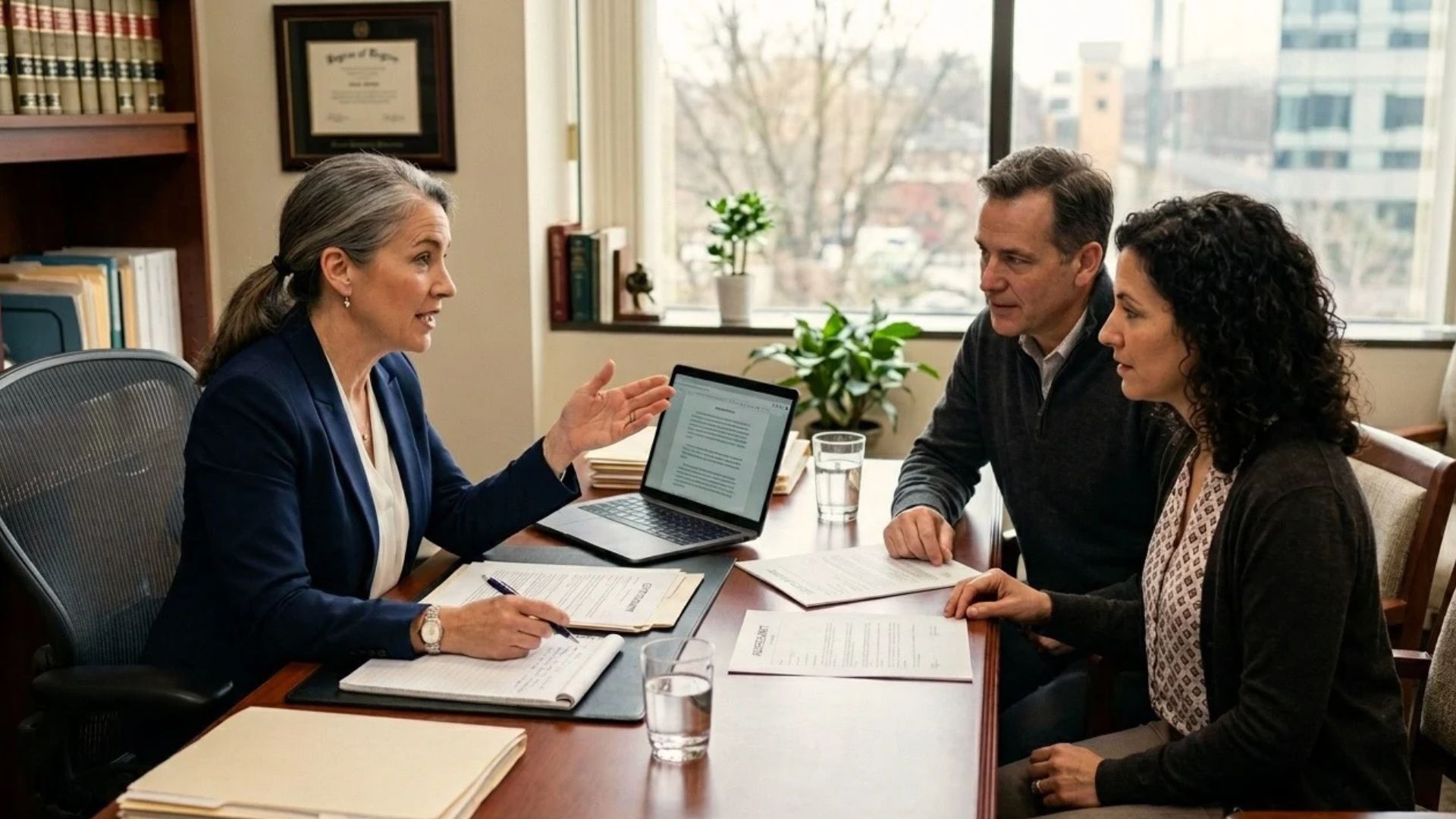
Spending winter somewhere warmer can be one of retirement’s great rewards. But owning property, receiving medical care, and spending significant time in two states can complicate an estate plan.
For Wisconsin snowbirds, the important question is not simply where you spend January. Your legal domicile, property ownership, Powers of Attorney, healthcare directives, tax residency, and probate exposure can all be affected by a two-state lifestyle.
An estate planning attorney can coordinate those moving pieces so Wisconsin remains aligned with your winter-state arrangements rather than allowing two sets of laws to collide during an emergency or after death.
Domicile Planning Is About More Than Counting Days
You can own homes in several states, but you generally have only one legal domicile.
Wisconsin defines domicile as your true, fixed, and permanent home: the place you intend to return to whenever absent. The Wisconsin Department of Revenue considers multiple facts, including where you live, vote, register vehicles, and own or rent property.
That makes consistency important.
If you consider Wisconsin home, your voter registration, driver’s license, tax filings, primary residence, legal documents, and other records should avoid sending contradictory signals.
Snowbirds considering changing domicile to another state should obtain coordinated legal and tax advice rather than relying on a simple “six months plus one day” assumption.
Will a Wisconsin Will Work in Another State?
A valid Wisconsin will does not become invalid merely because you spend part of the year elsewhere.
Likewise, Wisconsin recognizes many wills validly executed under another jurisdiction’s law. Wisconsin Statute § 853.05 recognizes written wills executed according to Wisconsin law or qualifying laws of the place of execution, residence, domicile, or nationality.
The bigger issue is often property location.
If someone remains domiciled in Wisconsin but individually owns a vacation home in another state, the Wisconsin estate may need a second proceeding in the state where that real estate is located. This is commonly called ancillary administration.
Wisconsin itself uses an ancillary probate process when a person domiciled elsewhere dies owning property that requires administration here.
That same principle can work in reverse for a Wisconsin snowbird owning individually titled property down south.
Trust Planning Can Help Avoid Two Probate Proceedings
One major reason snowbirds consider a revocable living trust is probate avoidance.
If both the Wisconsin residence and winter property are properly titled into the trust, the trustee can generally administer those trust assets without opening separate probate estates solely because the properties sit in two states.
The key word is properly.
Creating a trust but leaving the Florida, Arizona, Texas, or other vacation property titled individually can leave the ancillary-probate problem intact.
A two-state estate plan should therefore review every deed, trust schedule, beneficiary designation, and ownership arrangement.
Will My Financial Power of Attorney Travel?
Wisconsin law recognizes a financial Power of Attorney executed outside Wisconsin if it complied with the governing jurisdiction’s law when executed. Wisconsin also gives photocopies and electronically transmitted copies the same effect as the original under its statute.
That does not guarantee every out-of-state bank will accept a Wisconsin document immediately.
Local institutions may have their own verification procedures, and another state’s substantive law can affect how particular powers are interpreted.
Snowbirds should carry accessible copies and consider having the plan reviewed by counsel familiar with the winter state when substantial assets are kept there.
Healthcare Directives Matter Even More When Traveling
A medical emergency hundreds of miles from home is exactly when healthcare documentation needs to be easy to find.
Wisconsin recognizes qualifying healthcare Powers of Attorney executed in other jurisdictions, but another state determines how it treats a Wisconsin directive.
Before traveling, keep:
- Healthcare Power of Attorney copies
- Living will or advance directive
- HIPAA authorization
- Emergency contacts
- Medication and physician information
Digital copies should also be accessible to trusted agents.
Tax Residency Can Become Complicated
As long as Wisconsin remains your domicile, Wisconsin generally treats you as a resident even while you temporarily live elsewhere. Wisconsin residents report income regardless of where it is earned, with potential credits for qualifying taxes paid to another state.
A winter state may also tax income sourced there, and its rules for determining residency can differ.
Estate taxes require separate analysis. Wisconsin currently imposes no state estate tax for deaths after December 31, 2007 and no inheritance tax for deaths on or after January 1, 1992.
Your winter state may have different estate, inheritance, property, or income-tax rules, so multistate tax planning should be coordinated before changing domicile.
A winter home should create freedom, not a second layer of legal confusion. Krause Estate Planning & Elder Law Center helps Wisconsin snowbirds coordinate trusts, property ownership, Powers of Attorney, healthcare directives, beneficiary planning, domicile, and probate-avoidance strategies across state lines. Contact an estate planning attorney today to make sure your estate plan travels as well as you do.
Frequently Asked Questions
1. How is my legal domicile determined?
By intent plus objective facts such as homes, voting, licenses, registrations, tax filings, and where you treat as your permanent home.
2. Is my Wisconsin will valid if I die down south?
Generally, yes, if properly executed, although property in another state may still require that state’s probate procedures.
3. Will my Wisconsin POA be accepted?
It may be legally valid, but practical acceptance depends partly on the institution and winter-state law.
4. How can I avoid probate in two states?
Properly funded revocable trusts and other nonprobate ownership arrangements can often prevent individually owned real estate from requiring ancillary probate.
5. Can my Wisconsin healthcare directive work out of state?
Often, but recognition depends on the other state. Carry accessible copies and review them before extended travel.
6. Does splitting the year change my taxes?
Not automatically. Domicile, income sources, and each state’s residency rules control more than simple day counting.
7. Must my Executor live in Wisconsin?
No. A Wisconsin Personal Representative may live elsewhere, but a nonresident generally must appoint a Wisconsin resident agent, and the court retains discretion concerning suitability.
8. What if I become incapacitated in my winter state?
Without usable POA and healthcare documents, your family may face delays or potentially a court-supervised guardianship proceeding.
9. Do I need two estate plans?
Usually not two competing plans. You typically need one coordinated multistate plan reviewed for both jurisdictions.
10. Where should originals be stored?
Keep originals in a secure but accessible location and tell your trustee, Personal Representative, and agents where they are. Do not create a system where nobody can reach critical documents during an emergency.
TL; DR:
- An estate planning attorney can help Wisconsin snowbirds coordinate two-state estate planning so their legal documents, property ownership, and long-term wishes remain effective across multiple states.
- Effective multistate estate planning should address domicile planning, residency planning, and tax residency to reduce conflicts over which state’s laws apply to taxes, probate, healthcare, and property.
- A coordinated plan should review wills and trusts, trust planning, power of attorney, healthcare directives, and beneficiary planning so documents are recognized and practical whether the client is in Wisconsin or a winter residence.
- Families with out-of-state property or a second home should also consider vacation home planning, probate avoidance, and asset protection strategies to reduce the risk of multiple probate proceedings.
- By combining Wisconsin estate planning, retirement planning, and legacy planning with guidance under estate law Wisconsin, an estate planning attorney can help snowbirds protect assets and maintain greater legal consistency wherever they spend the year.