
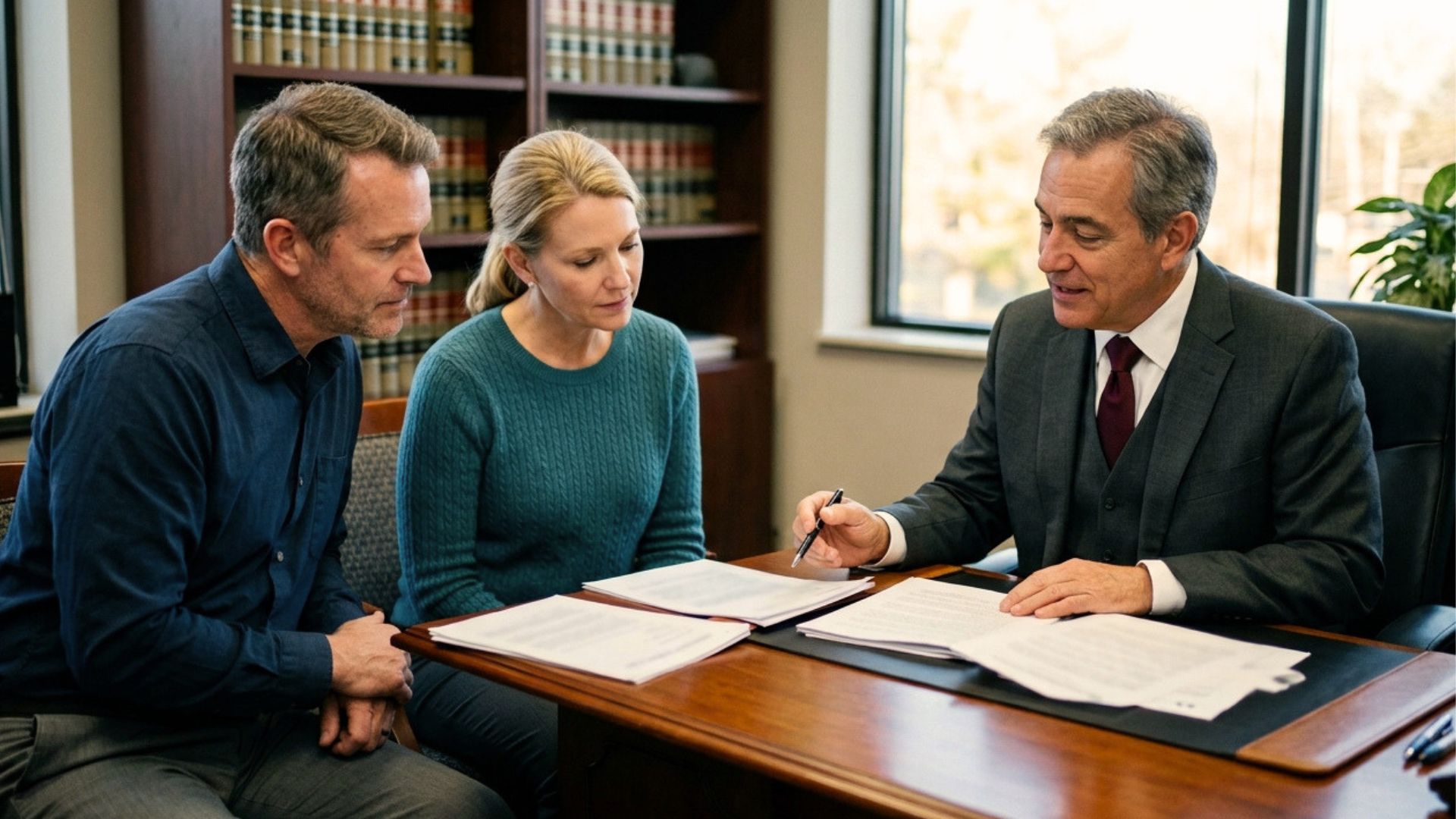
A good estate plan is not just a will, a trust, or a beneficiary form. It is the coordination of all three.
For Brookfield families, effective estate planning services should connect retirement accounts, real estate, family trusts, beneficiary designations, incapacity documents, and long-term inheritance goals. When those pieces are reviewed separately, conflicts can arise. An IRA may pass to someone different from the person named in the will. A trust may exist but own very few assets. A beneficiary designation completed 15 years ago may still control a major retirement account.
The goal is not simply to create documents. It is to make sure every asset follows the same overall plan.
Why IRA Beneficiary Designations Matter
An IRA generally passes according to the beneficiary designation maintained by the custodian, not according to instructions in a will.
The IRS defines a retirement-account beneficiary as the person or entity selected under the procedures of the plan or IRA. Beneficiaries are then subject to federal distribution rules after the account owner’s death.
That means Brookfield residents should regularly compare IRA and retirement-plan beneficiary forms with their:
- Will
- Revocable living trust
- Family trust provisions
- Charitable plans
- Broader inheritance strategy
Updating one document does not automatically update the others.
Post-SECURE Act Rules Changed Inherited IRAs
For many adult children inheriting an IRA after 2019, the old “stretch IRA” approach is no longer available.
Most non-spouse beneficiaries who are not considered eligible designated beneficiaries must fully distribute the inherited IRA by the end of the tenth year following the owner’s death. If the owner died after beginning required minimum distributions, annual beneficiary RMDs can also apply during that 10-year period.
Eligible designated beneficiaries, including surviving spouses, certain disabled or chronically ill beneficiaries, minor children of the account owner, and certain beneficiaries close in age to the owner, may qualify for different rules.
This makes beneficiary planning an income-tax decision as well as an inheritance decision.
Should a Family Trust Be the IRA Beneficiary?
Sometimes, but not automatically.
Naming children directly can simplify administration. Naming a trust may provide additional control when a beneficiary is young, financially vulnerable, disabled, struggling with creditors, or likely to need long-term oversight.
Federal rules make trust planning more technical. A trust itself is not a designated beneficiary, but qualifying trust beneficiaries may be treated as designated beneficiaries if requirements involving trust validity, irrevocability at death, identifiable beneficiaries, and custodian documentation are satisfied.
Poorly drafted trust language can therefore produce unintended distribution or tax consequences.
Wisconsin Marital Property Must Be Coordinated Too
Wisconsin generally presumes property acquired by spouses during marriage to be marital property, subject to statutory exceptions. Each spouse generally has a present one-half interest in marital property, while retirement benefits receive additional specialized treatment.
For Brookfield couples, that means IRA planning should not happen independently from real estate, marital property agreements, trusts, or beneficiary designations.
The legal title on an asset is only one part of the analysis.
Funded Trusts Can Reduce Waukesha County Probate
A revocable living trust can help avoid probate only if assets that should be controlled by the trust are actually transferred or otherwise coordinated with it.
Waukesha County’s Register in Probate handles the opening, administration, maintenance, and closing of probate estate files.
Proper trust funding may keep qualifying real estate, financial accounts, and other assets outside that court process. Retirement accounts, however, are usually coordinated through beneficiary designations rather than retitled into the trust during life.
That distinction is exactly why comprehensive estate plan reviews matter.
Balancing Children, Property, and Retirement Assets
“Equal” does not always mean giving each child one-third of every asset.
Suppose one child wants the Brookfield home while two others would rather receive investments. A coordinated estate plan might allocate the house to one beneficiary while using retirement accounts, investment assets, or other property to balance the overall inheritance.
Taxes matter here. Traditional IRA distributions are generally taxable to beneficiaries, while inherited real estate often receives a new basis at death under federal tax rules.
A dollar of traditional IRA value may therefore not equal a dollar of real estate value after taxes.
Charitable planning can create another opportunity. Traditional IRA assets can sometimes be especially efficient assets to leave to qualified tax-exempt charities because individuals generally recognize taxable IRA distributions, while qualifying 501(c)(3) organizations are generally exempt from federal income tax.
Your retirement accounts, family trust, real estate, and beneficiary forms should tell the same story. Krause Estate Planning & Elder Law Center provides estate planning services to help Brookfield families coordinate IRAs, trusts, beneficiary planning, incapacity documents, probate avoidance, and long-term wealth-transfer goals. Contact us today to review whether every part of your plan is working together the way you intended.
Frequently Asked Questions
1. Why do IRA beneficiary forms override my will or trust?
Because the IRA contract directs the custodian to distribute the account according to its beneficiary designation.
2. How did the SECURE Act change inherited IRAs?
Most adult non-spouse beneficiaries now must empty inherited accounts within 10 years, with additional annual RMD requirements in some cases.
3. Should I name my trust or my children directly?
It depends on tax goals, creditor concerns, beneficiary maturity, and how much control you want after death.
4. How does Wisconsin marital property law matter?
Marriage can create ownership rights that must be coordinated with deeds, beneficiary forms, and retirement accounts.
5. Can a revocable trust avoid Waukesha County probate?
A properly funded trust can keep qualifying assets outside probate, but simply signing the trust is not enough.
6. Are retirement assets good charitable gifts?
They can be. Traditional IRA assets often carry income-tax consequences for individual heirs that qualified charities generally do not face.
7. How do I treat children equally if one receives the house?
Use other assets to equalize the overall value while considering the different tax characteristics of each asset.
8. Can a trust protect an inherited IRA?
A trust may provide control over distributions and added protection for assets after distribution, but it must be carefully drafted. Inherited IRAs themselves do not receive the same federal bankruptcy protection as a person’s own retirement IRA.
9. What protects me if I become incapacitated?
A funded revocable trust and Financial Power of Attorney can provide complementary authority for managing assets and bills.
10. How often should Brookfield residents review their plan?
Every few years and after marriage, divorce, retirement, death of a beneficiary or trustee, major asset purchases, tax-law changes, or significant family changes.
TL; DR:
- Estate planning services can help Brookfield families coordinate IRAs, retirement accounts, and family trusts so each asset works together as part of one comprehensive Wisconsin estate planning strategy.
- Effective IRA planning requires careful review of beneficiary designations, because retirement accounts often pass directly to named beneficiaries and may not follow instructions contained in a will or trust.
- Thoughtful trust planning and family estate planning can support inheritance planning, asset protection, probate avoidance, and more controlled wealth transfer for spouses, children, and future generations.
- Professional estate planning services Brookfield can also align retirement planning, financial planning, and long term planning with estate law Wisconsin, helping families avoid conflicting documents and outdated beneficiary choices.
- By coordinating legacy planning, trust administration, estate administration, and wealth preservation, estate planning services can create a more cohesive plan that protects assets while supporting long-term family goals.