
Few dates in American historical remembrance have changed meaning as dramatically as October 12.
For generations, Columbus Day commemorated Christopher Columbus’s 1492 voyage and became particularly important within Italian-American communities. More recently, many communities have also adopted Indigenous Peoples’ Day, shifting attention toward the Native peoples who lived throughout the Americas long before European arrival and toward the lasting consequences of colonization.
Both observances now occupy an important place in conversations about American history, cultural identity, and how societies choose to remember the past.
What Actually Happened on October 12, 1492?
Early on October 12, 1492, a sailor aboard the Pinta sighted land after Columbus’s fleet had crossed the Atlantic.
Columbus and his crew reached an island in the Bahamas known to its Indigenous inhabitants as Guanahaní, which Columbus renamed San Salvador. The voyage initiated sustained contact between European powers and peoples of the Western Hemisphere.
The people Columbus encountered were not inhabitants of an unknown or empty world.
The Taíno had sophisticated political, religious, agricultural, navigational, and artistic traditions and lived throughout much of the Caribbean. The Library of Congress notes that European contact brought profound changes, including disease and other forces that devastated Taíno populations during the following decades.
Understanding October 12 therefore requires looking at the event from more than one historical perspective.
How Columbus Day Became an American Tradition
The first recorded American celebration honoring Columbus took place in 1792, marking the 300th anniversary of his landing.
A century later, President Benjamin Harrison encouraged nationwide observances for the 400th anniversary in 1892. During the following decades, Columbus celebrations became increasingly associated with Italian-American identity and civic recognition.
In 1934, Congress authorized the president to designate October 12 each year as Columbus Day. Later federal legislation moved the observance to the second Monday in October, beginning in 1971.
Federal law still designates the second Monday in October as Columbus Day today.
For many Italian Americans, the holiday became meaningful partly because Columbus offered a visible symbol of heritage during periods when Italian immigrants faced discrimination and struggled for social acceptance in the United States.
Why Indigenous Peoples’ Day Emerged
As historical scholarship and public awareness expanded, October 12 increasingly became a day for examining what European arrival meant for Indigenous peoples.
The Smithsonian’s National Museum of the American Indian emphasizes that Indigenous societies had occupied the Western Hemisphere for thousands of years before Columbus. European colonization subsequently brought warfare, enslavement, displacement, disease, and enormous losses of Indigenous lands and populations.
In 1992, on the 500th anniversary of Columbus’s voyage, Berkeley, California became the first U.S. city to formally establish Indigenous Peoples’ Day in place of Columbus Day.
The observance has since spread to numerous states, cities, universities, and institutions.
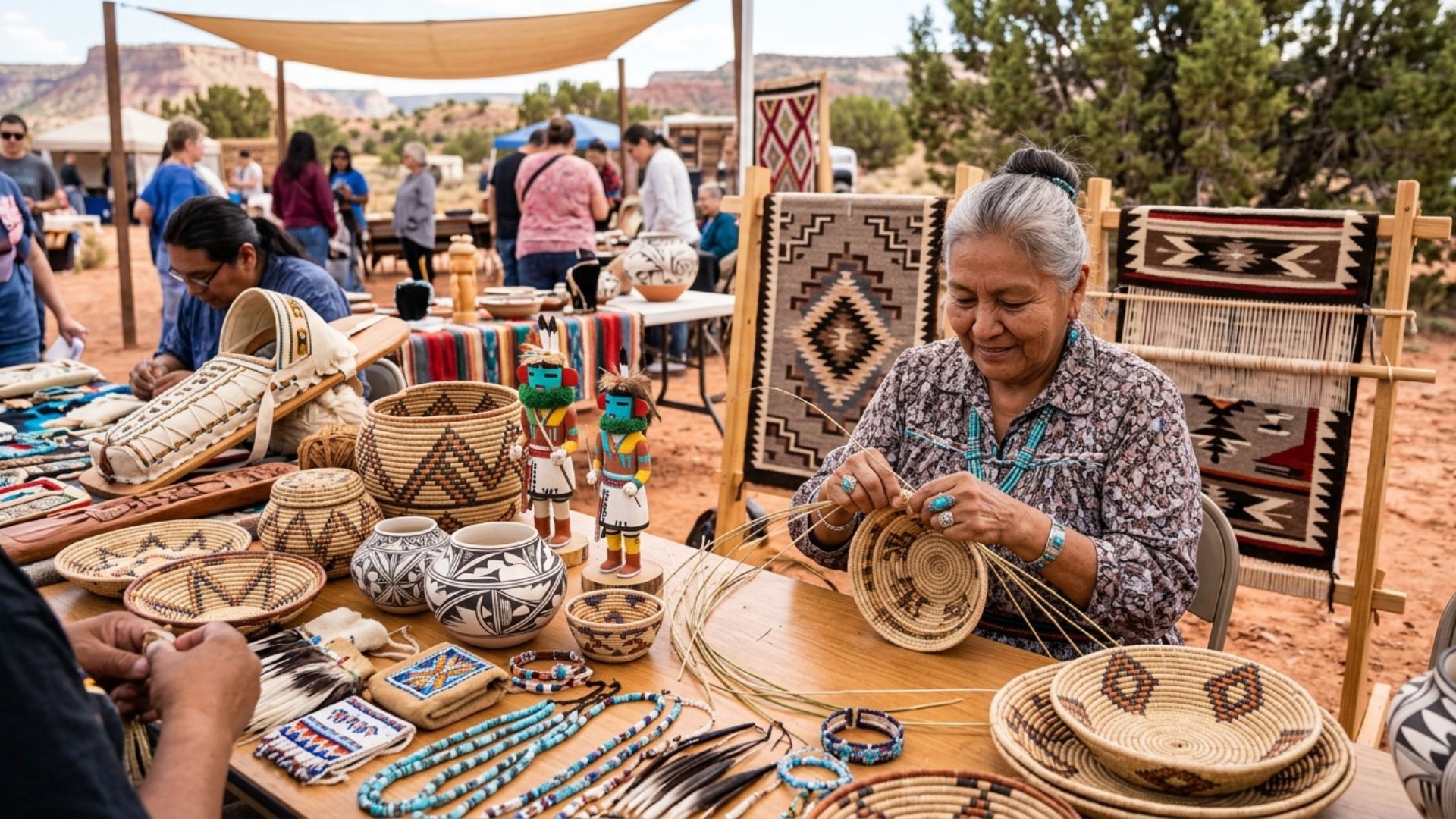
Rather than centering European exploration, Indigenous Peoples’ Day highlights Native history, living cultures, sovereignty, traditions, resilience, and contributions to contemporary society.
Columbus Day and Indigenous Peoples’ Day Tell Different Parts of the Story
The two observances are sometimes presented as if Americans must choose between completely incompatible versions of history.
History itself is more complicated.
Columbus’s voyages unquestionably altered world history. Sustained connections between Europe, Africa, and the Americas reshaped trade, migration, agriculture, politics, religion, and cultural exchange on a global scale.
They also opened an era of conquest and colonization that brought catastrophic consequences to many Indigenous societies.
The Library of Congress describes the post-1492 encounter as a complex process involving exploration, conquest, cultural exchange, resistance, accommodation, and profound transformation.
Recognizing one part of that history does not require ignoring another.
Historical Remembrance Changes Over Time
Public holidays often tell us as much about the generation observing them as the historical event being remembered.
Columbus Day developed at a time when Americans were celebrating exploration and when Italian-American communities were seeking greater public recognition.
Indigenous Peoples’ Day grew from a different historical conversation: one asking whose experiences had been missing from traditional narratives of European “discovery.”
That evolution is part of American history itself.
Museums, classrooms, families, and communities continually revisit historical events as additional records and perspectives become available. The purpose does not have to be replacing one simplified story with another. It can instead mean developing a fuller understanding of the people whose lives intersected at pivotal moments.
Remembering Cultural Heritage Within Families
History is also preserved on a much smaller scale.
Families carry their own stories of immigration, military service, cultural traditions, Indigenous heritage, community life, hardship, entrepreneurship, and migration across generations.
Those stories can disappear surprisingly quickly if they are never recorded.
Legacy planning can preserve more than financial property. Families may choose to organize photographs, record oral histories, preserve letters and recipes, identify culturally significant heirlooms, or prepare legacy letters explaining what particular traditions mean.
A will or trust can determine who inherits property. A thoughtful family legacy can explain why that property and history matter.
Looking at October 12 With a Wider Lens
October 12 represents several layers of history at once.
It marks Columbus’s arrival in the Caribbean in 1492. It became the foundation of a federal holiday that remains legally designated as Columbus Day. And it has become an occasion for many communities to recognize the histories and living cultures of Indigenous peoples.
Those perspectives reflect different experiences within the broader American story.
Studying them together can offer something more valuable than a simplified celebration or condemnation: a clearer understanding of how historical events acquire meaning, how cultural identity evolves, and how one generation decides what history it will pass to the next.
Family history is part of a legacy too. Krause Estate Planning & Elder Law Center helps Wisconsin families protect property while preserving the values, traditions, heirlooms, and stories they want future generations to understand. Contact us today to discuss wills, trusts, beneficiary planning, and an estate plan designed around the legacy your family wants to carry forward.
TL; DR:
- Columbus Day has long been part of American history, originally commemorating the 1492 voyage of Christopher Columbus and the broader era of European exploration that reshaped the Americas.
- Understanding October 12 history also means examining the lasting consequences of colonial history, including its impact on Indigenous cultures, Native American heritage, and the lives of Indigenous peoples across generations.
- Indigenous Peoples’ Day emerged as an alternative form of historical remembrance, emphasizing Native American history, Indigenous history, cultural survival, and the contributions of Indigenous communities.
- The coexistence of Columbus Day and Indigenous Peoples’ Day reflects changing historical perspectives, evolving American traditions, and ongoing conversations about cultural identity, cultural heritage, and national memory.
- As debates around federal holidays and public holidays continue, October 12 provides an opportunity for greater social awareness and a more complete understanding of America’s complex historical legacy.