
TL;DR:
- Waffle Day celebrates the long and delicious waffle history that transformed simple batter cooked between early waffle irons into one of the world’s most recognizable breakfast foods.
- The origins of waffles stretch back to medieval cooking and European cuisine, where patterned irons helped shape early versions of the dish and established lasting culinary traditions.
- Over time, waffles became an important part of American breakfast and American food culture, evolving into a familiar classic breakfast served in homes, diners, and restaurants across the country.
- From crisp Belgian waffles to creative breakfast recipes, waffles have become staples of modern brunch culture, joining other beloved baked goods, sweet breakfasts, and nostalgic comfort food favorites.
- National Waffle Day highlights how centuries of food history turned waffles from practical traditional foods into an enduring breakfast favorite enjoyed in countless styles around the world.
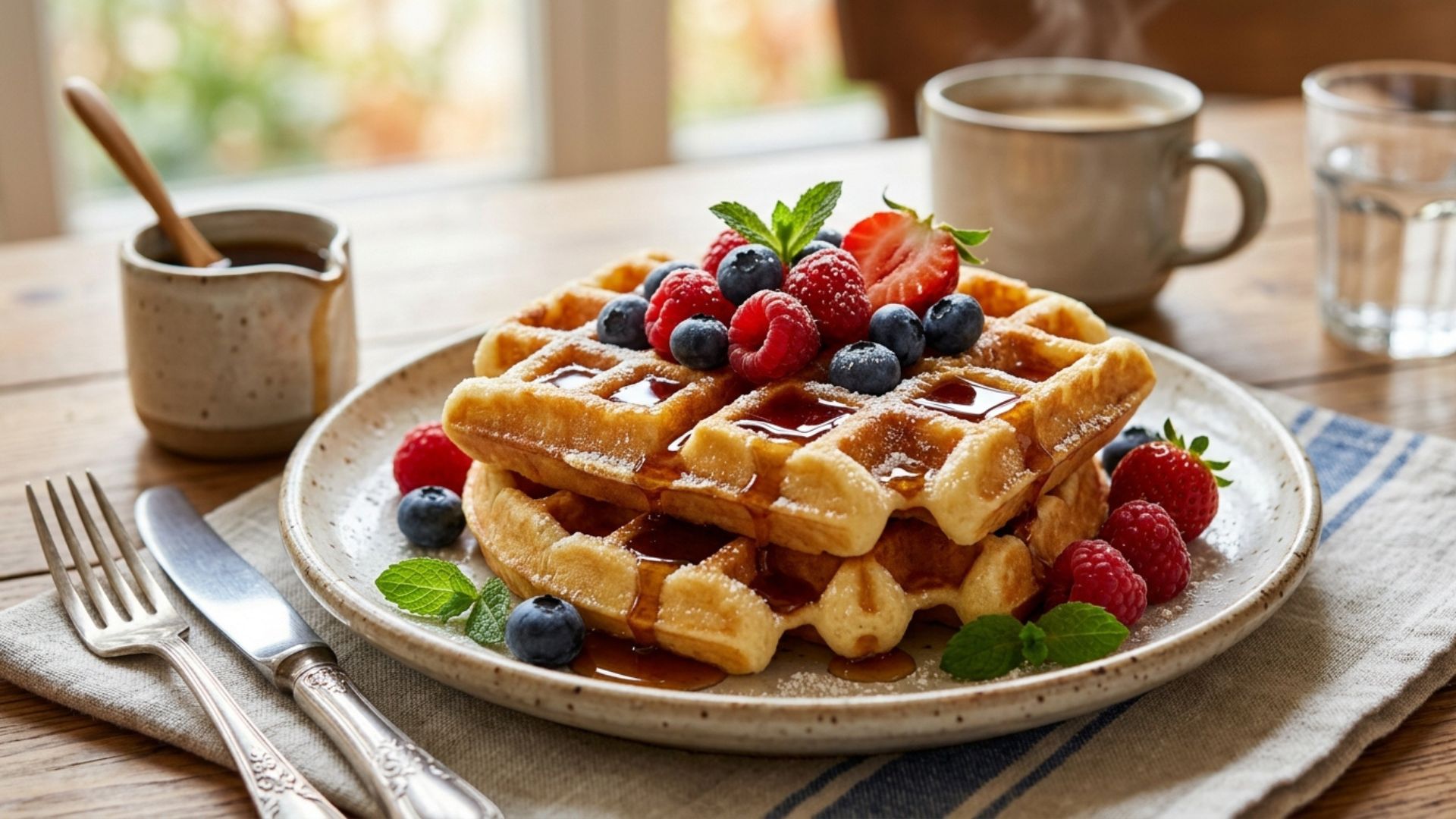
Few breakfast foods are as instantly recognizable as a golden waffle. Crisp around the edges, soft inside, and covered with everything from maple syrup and berries to whipped cream or fried chicken, waffles have become a fixture of American breakfast and brunch culture.
Celebrated each year on August 24, National Waffle Day recognizes a food with a history far older than the modern electric waffle maker. The date commemorates an important American innovation: on August 24, 1869, Cornelius Swartwout received a U.S. patent for an improved waffle iron that made cooking waffles safer and easier.
Yet the story of waffles begins centuries earlier, with medieval cooking, decorative iron plates, and European culinary traditions that eventually crossed the Atlantic and became part of American food culture.
Waffle History Began Long Before Breakfast Diners
The earliest ancestors of waffles looked very different from the thick, fluffy breakfast foods we know today.
Ancient cooks prepared flat cakes between heated metal plates, but by medieval Europe, specialized wafer irons had become increasingly elaborate. These hinged metal plates were held over open fires and often contained detailed designs that stamped religious images, coats of arms, animals, or decorative patterns into the food.
Medieval wafers were typically thinner and crisper than modern waffles. Over time, recipes evolved as cooks gained access to ingredients such as spices, eggs, butter, and sweeteners.
By around the 15th century, Dutch waffle makers were using rectangular irons, helping move the food closer to the familiar grid-shaped waffles of today.
Waffle Irons Turned Cooking Into an Art Form
Early waffle irons were more than kitchen utensils.
Because their plates could carry intricate designs, they sometimes became personalized household objects and even wedding gifts. Families could prepare food marked with symbols tied to religion, family identity, or local traditions.
Cooking with them, however, was not always easy.
Traditional waffle irons consisted of two heavy plates attached to long handles. Cooks held them over a hearth or open flame, turning the iron manually while trying to avoid burning both the waffle and themselves.
That challenge eventually inspired an American improvement.
How August 24 Became National Waffle Day
Cornelius Swartwout of Troy, New York, developed an improved stove-top waffle iron with a handle that made opening, closing, and rotating the device safer.
His invention received U.S. Patent No. 94,043 on August 24, 1869. Smithsonian Magazine notes that National Waffle Day is celebrated on that same date in recognition of Swartwout’s contribution.
The improvement helped make waffle preparation more practical in American homes.
Technology continued evolving. General Electric developed an early electric waffle iron prototype in 1911, with commercial production following several years later.
Eventually, what once required an open fire and heavy iron plates could be accomplished by plugging a small appliance into the kitchen wall.
How Waffles Became an American Breakfast Favorite
Waffles fit naturally into the development of the classic American breakfast.
They could be prepared at home, served in restaurants, topped in countless ways, and adapted to both sweet and savory meals.
Over time, waffles became associated with:
- Maple syrup and butter
- Fresh fruit
- Whipped cream
- Fried chicken
- Ice cream
- Breakfast meats
- Brunch dishes
- Holiday breakfasts
Their distinctive grid pattern also turned out to be highly practical, creating small pockets perfectly suited for holding syrup, fruit, melted butter, and other toppings.
Waffles became comfort food precisely because they could remain familiar while constantly being reinvented.
Belgian Waffles Helped Create a New American Craze
One of the biggest developments in modern American waffle culture came from Belgian-style waffles.
Belgian waffles became a major attraction at the 1964–1965 New York World’s Fair. Vendors served large waffles with combinations such as powdered sugar, whipped cream, and fresh strawberries, and the food became one of the Fair’s memorable culinary sensations.
Their popularity helped introduce many American diners to a lighter, deeper-pocketed waffle style.
Today, “Belgian waffle” is common on breakfast and brunch menus throughout the United States, demonstrating how European cuisine and American restaurant culture continually influence one another.
Why Waffles Remain Part of Breakfast Culture
Part of the waffle’s staying power comes from versatility.
A simple batter can become a quick weekday breakfast, an elaborate Sunday brunch, or part of a family holiday tradition.
Families may have their own preferred recipes, favorite toppings, or waffle makers that appear only on special occasions. Some recipes are passed from grandparents to parents and eventually to children.
These ordinary rituals often become surprisingly meaningful.
A particular breakfast may remind someone of summers at a grandparent’s home. An old cast-iron waffle maker might become a treasured kitchen heirloom. A handwritten recipe card can carry memories that far exceed its financial value.
Food Traditions Are Part of a Family Legacy
Estate planning usually focuses on houses, investments, accounts, and other valuable property. But families often care equally about items whose importance cannot be measured in dollars.
Recipes, cookware, photographs, letters, and family traditions can all form part of a personal legacy.
Families may want to identify who should receive meaningful heirlooms, preserve handwritten recipes, record the stories behind treasured belongings, or create legacy letters explaining why particular traditions matter.
Clear estate planning can protect financial property while also helping future generations understand the memories attached to what they inherit.
Celebrating National Waffle Day
National Waffle Day is a perfect excuse to heat the waffle iron, try a family recipe, or experiment with something new.
It is also a reminder of how traditional foods evolve. What began centuries ago as thin wafers cooked between decorative medieval irons eventually became one of America’s most recognizable breakfast foods.
From European hearths to electric kitchen appliances, waffles have survived because each generation found a way to make the tradition its own.
Sometimes history really can be served for breakfast.
Family legacies are built from more than financial assets. They include recipes, traditions, treasured belongings, and the memories connected to them. Krause Estate Planning & Elder Law Center helps Wisconsin families create thoughtful estate plans that preserve property while providing clarity about what should pass to future generations. Contact us today to create a plan that protects both the assets you have built and the traditions that make your family’s story unique.