
TL;DR:
- Tex-Mex Dishes reflect a rich blend of Mexican cuisine, Texas food culture, and American food history, creating a distinctive style of Mexican American food shaped by generations of regional influence.
- The story behind National Fajita Day begins with humble fajita origins rooted in ranch cooking, where inexpensive cuts like skirt steak were transformed into flavorful grilled meats.
- Over time, sizzling fajitas moved from ranches and backyard grills into mainstream restaurant culture, becoming one of the most recognizable iconic dishes in modern Tex-Mex cuisine.
- Understanding fajita history also reveals how Southwestern cuisine, traditional recipes, and local culinary traditions helped turn practical ranch meals into globally loved Tex-Mex dishes.
- From fajitas to countless other regional favorites, Tex-Mex Dishes continue to preserve food heritage while evolving through changing tastes, cultural exchange, and the enduring popularity of this uniquely American regional cuisine.
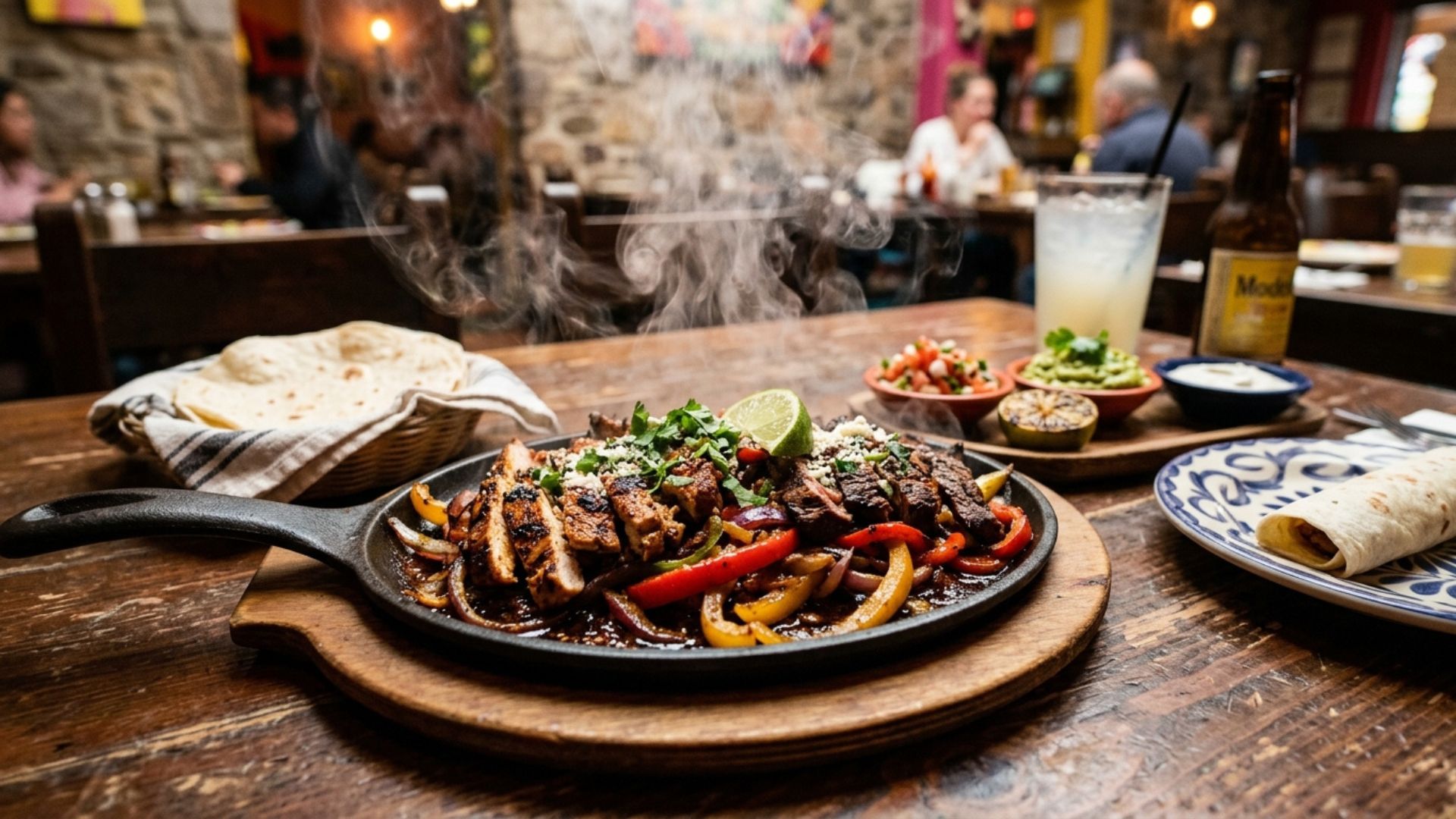
Few restaurant entrances are as dramatic as a sizzling cast-iron skillet of fajitas arriving at the table. The sound, aroma, grilled meat, warm tortillas, and colorful vegetables have become instantly recognizable around the world. Yet long before fajitas became a restaurant spectacle, their story was rooted in working-class Mexican American food traditions in Texas.
Celebrated each year on August 18, National Fajita Day gives food lovers an opportunity to appreciate one of the best-known Tex Mex dishes while exploring the cultural history behind it. The modern observance began in 2016, when On The Border Mexican Grill & Cantina established National Fajita Day to celebrate the dish.
The food itself, however, has a history stretching much further back.
Fajita History Began Long Before the Restaurant Skillet
The precise origin story of fajitas is difficult to reduce to one inventor or moment.
Food historians generally connect their roots to Mexican American ranching communities in South Texas, where cattle butchering produced cuts such as skirt steak. The Texas State Historical Association describes fajitas as a traditional South Texas folk food within the broader development of Texas-Mexican cuisine.
Skirt steak was flavorful but could be tough, making grilling over high heat and slicing the meat thinly an effective preparation method. Served with tortillas and other readily available foods, it became part of practical ranch cooking rather than the elaborate restaurant presentation familiar today.
Even the word reflects the original cut. “Fajita” derives from the Spanish faja, meaning belt or sash, referencing the long, narrow shape of skirt steak.
From Ranch Cooking to Restaurant Culture
Fajitas did not become a national restaurant phenomenon overnight.
By the late 1960s and early 1970s, entrepreneurs and restaurateurs began introducing the dish to larger audiences. One influential figure was Houston restaurateur Ninfa Laurenzo, whose restaurant began serving grilled beef tacos in the early 1970s and helped popularize fajita-style cooking throughout Houston and eventually beyond Texas. She did not invent the dish, but her restaurant played an important role in bringing it to mainstream diners.
As restaurant culture embraced fajitas, presentation became part of the experience. Hot skillets, grilled onions and peppers, tortillas, salsa, guacamole, and other accompaniments transformed a practical regional dish into dinner theater.
Eventually, chicken, shrimp, vegetables, and other proteins joined traditional skirt steak on fajita menus.
Tex Mex Dishes Are a Story of Cultural Exchange
Fajitas are only one chapter in the much larger history of Tex-Mex cuisine.
The Texas State Historical Association traces Texas-Mexican food traditions to the meeting of Native American and Spanish foodways, followed by generations of regional adaptation among Mexican American communities. Corn, beans, peppers, squash, cattle, wheat, and other ingredients came together differently across Texas, producing a cuisine with its own regional identity.
Iconic foods associated with Tex-Mex traditions include:
- Enchiladas
- Tacos
- Tamales
- Chile con carne
- Quesadillas
- Refried beans
- Fajitas
- Flour tortillas
- Chile con queso
Many of these foods have connections to Mexican cuisine, but their preparation and popularity evolved through life in Texas and the American Southwest.
That is why Tex-Mex should not simply be viewed as “Americanized Mexican food.” It represents generations of cultural exchange, immigration, regional ingredients, family cooking, and Mexican American food heritage.
Why Sizzling Fajitas Became a Global Favorite
Fajitas possess something many traditional recipes do not: built-in spectacle.
A sizzling skillet engages nearly every sense before the first bite. Diners hear the meat cooking, smell onions and peppers, see the steam, and then assemble their own tortillas at the table.
That combination made fajitas particularly well suited to restaurant culture.
The dish also adapts easily. Traditional skirt steak can be replaced with chicken, seafood, vegetables, or alternative cuts of beef, while toppings allow each person to customize the meal.
This flexibility helped fajitas travel beyond Southwestern cuisine and become familiar in restaurants and home kitchens far outside Texas.
Food Traditions Become Family Traditions
The history of Tex Mex dishes also demonstrates how food preserves cultural memory.
Recipes often travel through generations without formal documentation. A grandparent teaches a child how long to cook the meat. Someone remembers which chile belongs in the salsa. A handwritten recipe card becomes stained and faded after decades in the kitchen.
Those seemingly ordinary traditions eventually become part of a family’s identity.
The same principle applies to family heirlooms, property, stories, businesses, and values. A legacy is rarely defined only by financial assets. It also includes the memories and traditions families choose to preserve and pass forward.
Thoughtful estate planning can provide a framework for protecting tangible assets while families continue passing the intangible pieces of their history from one generation to another.
Celebrating National Fajita Day
National Fajita Day is an excellent excuse to fire up the grill, heat a skillet, and gather around the table. But it can also be an opportunity to appreciate the communities and culinary traditions that transformed a humble cut of beef into one of America’s most recognizable regional foods.
From South Texas ranch cooking to modern restaurant menus around the world, fajitas demonstrate how recipes evolve while still carrying pieces of their origins with them.
Sometimes preserving history begins with something as simple as remembering where dinner came from.
The traditions families treasure are often built around shared meals, meaningful property, personal stories, and memories passed from one generation to the next. Krause Estate Planning & Elder Law Center helps Wisconsin families create estate plans designed to preserve what matters and provide clarity for the people they love. Contact us today to begin building a thoughtful plan for your family’s legacy.